From Nihilism to Absurdism Joy: When “Nothing Matters” is a Good Thing
I was scrolling TikTok the other day,
a favorite pastime of mine, when I came across a video claiming you can cure nihilism with absurdism. At first, I laughed, because it sounded like a philosophy professor’s idea of a dad joke, but then I realized… it’s actually kind of brilliant.
So, in classic ME form, I brought it here to break it down for the class.
The Weight of Nihilism
If I had to distill it, I would compare Nihilism to the vibe of staring into your fridge at 2 am and thinking, “What’s the point? Nothing looks good anyway” but cranked up to the existential level. It’s the belief that life has no inherent meaning, no grand plan, no cosmic purpose. For some people, this realization feels freeing, and for others, it feels like walking around with a heavy, wet blanket of despair and hopelessness.
Nihilism can feel like a dead end. If you’ve ever felt the weight of “what’s the point?” pressing down so hard you can barely move, you’re not alone. A lot of people get stuck here. And honestly, it makes sense. Facing a world that doesn’t hand out ready-made meaning is scary. But what if instead of collapsing under that silence, you could loosen the grip and laugh at it a little? That’s where absurdism comes in.
If nothing matters, why bother getting out of bed? Why go to work? Why finish the laundry? Why keep trying?
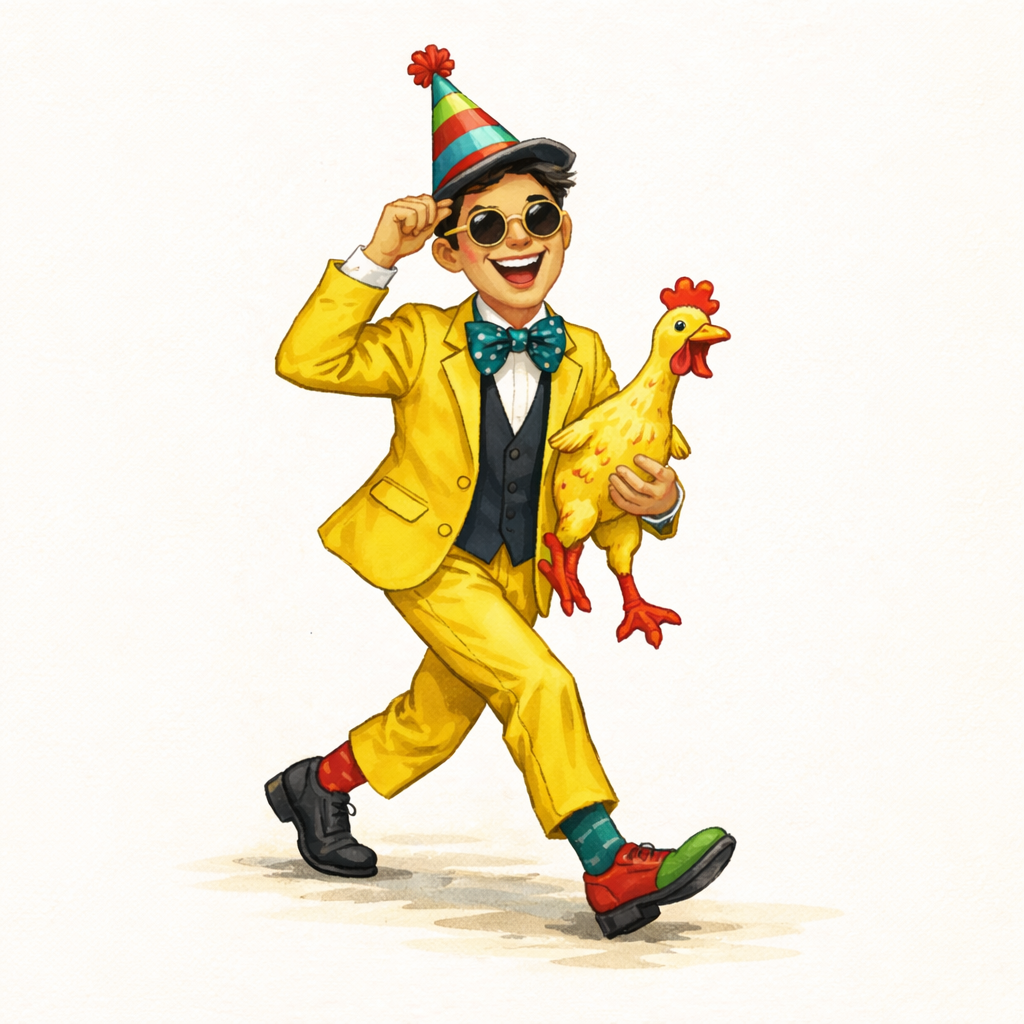
Enter absurdism, waltzing in, wearing mismatched socks, carrying a rubber chicken, and wearing a party hat.
Absurdism: The Plot Twist
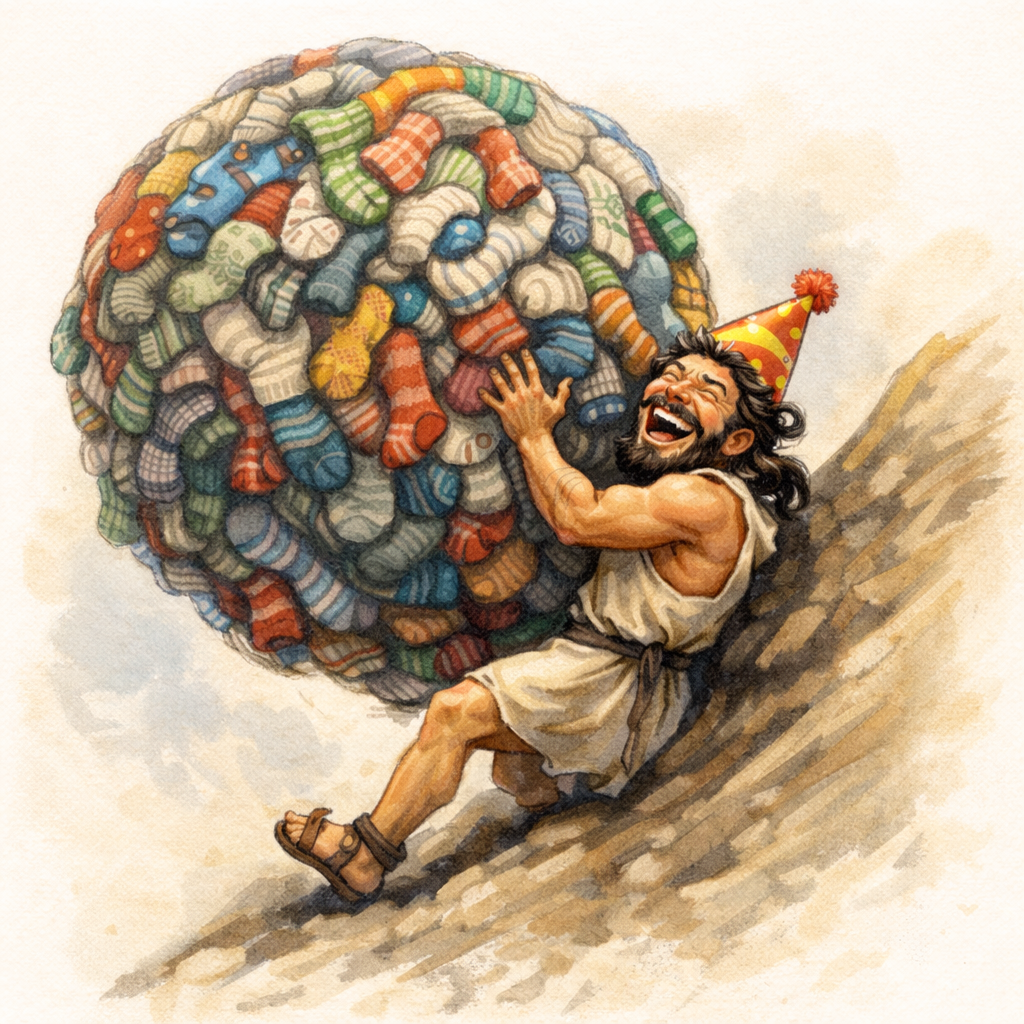
Absurdism is the brainchild of philosopher Albert Camus (the guy who famously said we should imagine Sisyphus, yes, the rock-pushing dude from mythology, as happy).
If nihilism tells you “nothing matters,” absurdism replies, “okay… then I get to play anyway.” And play is medicine! Research backs this up: psychiatrist Stuart Brown found that adults who engage in play regularly are more resilient, less stressed, and better at problem-solving. In other words, play helps you carry the weight of existence without getting crushed by it.
The gist is this:
Life has no inherent meaning.
We desperately want meaning.
The universe being silent while we’re craving answers is “the absurd.”
Instead of getting crushed under the silence, absurdism says, “Cool. Since nothing has to matter, you’re free to decide what matters to you.”
It’s not about ignoring the meaninglessness, but rather about dancing with it.
So… How Does This “Cure” Nihilism?
First, of all, “Cure” is a strong word here, it’s more like it makes it palatable. Think of it like this:
Nihilism: “Nothing matters, so why try?”
Absurdism: “Nothing matters, so I might as well eat cake for breakfast, paint something ugly, and laugh as loud as I want.”
One is despair. The other is permission to play. And play is healing!
The Healing Nature of Play (Yes, Even for Grown-Ups)
Here’s the thing: absurdism is more than just laughing at life’s nonsense, it’s also about giving yourself permission to play. And play isn’t just for kids. In fact, research shows that play is crucial for mental health across the lifespan, be that with your partner, your children, strangers, whoever.
Psychiatrist Stuart Brown (who literally founded the National Institute for Play) found that adults who regularly engage in play are more resilient, less stressed, and even show improved problem-solving and relationship skills. Play activates the brain’s reward circuits, reduces cortisol (that pain-in-the-ass stress hormone), and boosts creativity. Basically, it rewires you to find joy.
And the kicker? Play forces you to be present. You can’t halfheartedly play tag with your kids or build a Lego castle while also doomscrolling X (or TikTok, or Instagram; pick your poison!), you have to actually be there. That presence is the same sweet spot mindfulness is always bragging about: here, now, in this moment.
Absurdism and play overlap beautifully here. If life doesn’t come with a manual, then play is one of the best ways to reclaim joy, connect with others, and make the moment matter. Because honestly… where else are you gonna be, if not right here, right now?
Practical Absurdist Practices (aka, How to Live Like Camus Without Reading Camus)
Here’s how you can start leaning into absurd joy in everyday life:
Tiny, Low-Barrier Experiments
Change one small thing about your routine on purpose (sit in a different chair, stir your coffee with a fork). Notice how it feels.
Watch a stand-up clip or absurd sketch comedy when the heaviness sets in. Humor disrupts despair, even briefly.
Name your “boulder.” If laundry feels like Sisyphus’s rock, call it “Mount Socksmore” and see if naming it lightens it (A new spin on “name it to tame it”).
Medium, Accessible Play
Try “bad art night” by yourself or with a friend. Intentionally draw or paint something terrible and laugh at it.
Do a mundane task in a ridiculous way (wash dishes wearing sunglasses, narrate your life like it’s a cooking show).
Keep a running list of “pointless joys” and actually do one every week.
Bigger Invitations
Join an improv, dance, or art class; not to get good, but to practice showing up for play.
Plan an “absurd day” once a season where you commit to silliness (backwards meals, odd outfits, etc.).
Create a personal ritual of revolt: something you do that says, “life might be meaningless, but I choose this anyway.” (For some, that’s writing poetry; for others, climbing a mountain.)
Do something delightfully silly on purpose. Dance in your kitchen. Wear glitter to the grocery store. Serenade your dog. Put clothes on your concrete goose in the yard.
Make pointless art. Doodle. Build a Lego castle. Write a haiku about dumb shit. (10/10 would recommend.)
Find humor in the grind. When you’re stuck in endless laundry cycles or email chains, Laugh (or at least smirk) at the absurdity. (See “Mount Socksmore” above!)
Say yes to joy without overthinking. Eat the fancy dessert. Climb a tree (like how long has it been since we’ve done this?!). Try a hobby you’re “bad” at. Or just do some innocuous task badly or oddly on purpose.
Decide what matters (just for you). Relationships, passions, tiny rituals, these don’t need cosmic validation. They’re meaningful because you said so.
The Takeaway
If you’re reading this from a place of nihilism, I want you to know I’m not making light of your pain. That hopelessness is real. But absurdism offers another option: if nothing matters, then you get to decide what matters. And that choice, no matter how small or silly, is an act of courage. Even if it starts with dancing in your kitchen or stirring your coffee with a fork.
If life has no built-in meaning, then everything is wide open. You can love fiercely, play shamelessly, and create freely because the rules are yours to write.
So maybe the cure for nihilism isn’t finding a serious answer at all. Maybe it’s leaning into the absurd, laughing at the boulder, and deciding to find joy anyway.
After all, if nothing matters… then anything can.